
Written by: Oliver Heffron
Tiffany Stringer is an endearing Texas girl with a grand, luminous Hollywood vision. The ascendant country-pop singer-songwriter has been turning heads since her breakout The Texas Primadonna EP last year, garnering co-signs from the likes of Halsey, Addison Rae, and Tate McRae and touring with Stella Cole and The Two Lips. Stringer stands out with her witty, sincere songwriting paired with sweeping production, and her sound seems to have found its final form on her new EP, The Lone Starlet.
The project tells a complete story about a Texas-born Hollywood starlet who moves to Los Angeles to chase her dreams, from her arrival at the premiere of her film on “Damn Good Actress,” to her reckoning with the reasons she’s been chasing accolades and acclaim in the first place on “The Encore.”
“Bullet” sees Stringer deliver a hilarious, infectious ode to nearly missing an ex, and feels in conversation with the next track, “Casualty,” a witty response to the “all’s fair in love and war” proverb, whose accompanying music video just dropped today. Meanwhile, “Supernova” takes off the makeup and shares the vulnerability of falling in love.
Catching up with Nuance from her parents’ backyard in Texas, Tiffany Stringer discusses how she fell in love with performing, the inspiration for her songwriting, and her cinematic vision for The Lone Starlet EP.
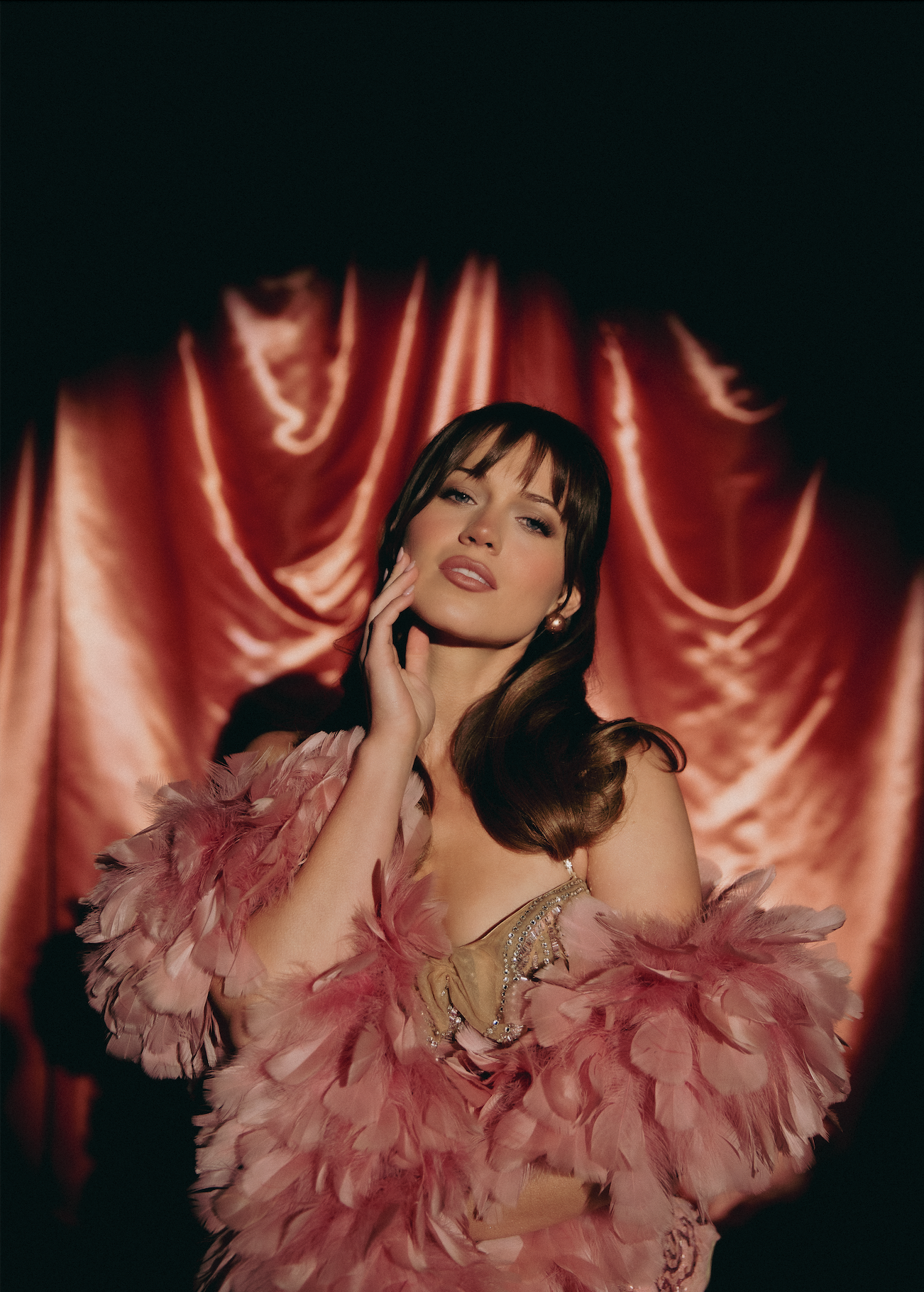
Photo Credit: Ragan Henderson
Growing up in the suburbs of the Dallas-Fort Worth area, Stringer knew she wanted to perform on stage from an early age. “I started out as a dancer when I was like two,” she says. “Then, I got into theater and acting a little bit more, and really loved being on stage, so that, for me, is like my first love.” She remembers that her love for singing in front of an audience began when she was booked as a Kids Bop Kid on tour. “That, for me, was like the first time I got to perform pop songs on stage,” she explains. “I think it was always ingrained in my life, but I realized I could do it forever then, and so that's what I decided to do.”
On The Lone Starlet, Stringer filters her story of moving from Texas to LA to chase her music dreams through the heightened lens of a Hollywood fantasy, and the EP plays like a self-portrait enlarged to cinematic proportions. “It kind of is just like a magnified version of my story,” she says. “It's basically about me moving out to LA and kind of admitting that I have these grandiose dreams of things that I want. Sometimes I worry if it's selfish that I want those things.”
From the immersive intro, the world of The Lone Starlet is rendered with striking detail, drawing as much from classic cinema as contemporary pop. Stringer speaks about her music in scenes and aesthetics as often as melodies, citing old Hollywood musicals and westerns as key inspirations behind the project’s visual language. “I'm very inspired by a lot of movies. I think visuals are such a fun thing for me,” she says. “Singin’ in the Rain and this western film called High Noon really informed the old-Hollywood, and helped me tap into the Texas-western of it all.”
Produced at North Hollywood’s iconic Valentine Recording Studios, that cinematic scope extends to the music itself. Having written most of the songs in a bedroom, Stringers says that watching those tracks blossom into orchestral, expansive productions filled with dramatic strings and sweeping arrangements was a surreal experience. “We start these songs usually in a bedroom somewhere,” she says. “When I was there and we were recording strings, I was like, how did something that feels so silly or so simple, like writing little stories about my life, lead me to a place like this? It was very surreal, and I'm very grateful.”
While The Lone Starlet indulges in glamour and theatricality, some of its strongest moments arrive when Stringer lets the facade crack. On “Supernova,” she captures the anxiety of being deeply in love while fearing that happiness could disappear at any moment. The track trades the biting humor of earlier songs for something more vulnerable and searching. “I would be having these beautiful moments with him, but my internal dialogue would be like, is everything gonna go wrong?” she says. “That song is kind of the expression of all that, really asking him, is this something that's gonna last? Because I'm inevitably gonna change — will you be able to change with me?”
Elsewhere, Stringer balances emotional honesty with sharp comedic instincts. “Bullet,” one of the project’s most infectious tracks, emerged from a dizzying real-life coincidence when she dreamt that an ex-boyfriend got married, only to wake up and discover he actually had. “I went and checked his Instagram that morning and he had posted that he got married, and I was like, what the hell,” she says, laughing. Leaning into the phrase “I dodged a bullet,” Stringer decided to fully embrace the country storytelling tradition embedded in the idea. “I was like, that is a country song—I want to make it what it wants to be. We just giggled our whole way through; we were laughing our asses off at the fact that we were writing what we were writing.”
But the song’s follow-up, “Casualty,” complicates that revenge narrative. Where “Bullet” gleefully turns an ex into a punchline, “Casualty” wrestles with the ethics of transforming real people and relationships into material. Stringer is acutely aware of the strange emotional trade-offs that songwriting can create. “‘Bullet’ is like this attack on my ex in some ways, and then ‘Casualty’ is about how I feel about doing that in songwriting,” she explains. “I'm like, is that okay, that I'm doing that?”
That self-awareness is part of what gives The Lone Starlet its emotional depth beneath all the sparkle and spectacle. Even as Stringer embraces fantasy, she constantly interrogates the desires and contradictions underneath it. The EP understands performance not as deception, but as an exaggerated extension of real feeling — a way of turning private anxieties into something big enough to fill a theater screen.
As the project has grown, Stringer has also been finding new ways to bring fans into its world beyond streaming platforms. To celebrate the release, she hosted fan-premiere events centered on the EP’s visuals and storytelling. “Basically, what we would do is I would play all the music videos, and then I would do a Q&A where they could ask questions about the inspirations behind all of it,” she says. “Then I did a little acoustic performance, which was really fun.”
For an artist so inspired by cinema and spectacle, those intimate fan interactions seem equally important. Beneath the rhinestones, sweeping strings, and Hollywood imagery, Stringer’s music remains rooted in storytelling — turning awkward heartbreaks, private fears, and impossible ambitions into songs that feel both larger-than-life and deeply personal. With The Lone Starlet, Tiffany Stringer has created a world big enough to hold both the dream and the doubt behind it.